

Key summary
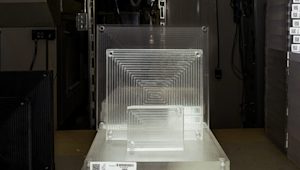
Acrylic (PMMA) is a transparent, lightweight thermoplastic known for its exceptional optical clarity, transmitting approximately 92% of visible light at roughly half the weight of glass. It is available as cast acrylic for superior machinability and high-precision parts or as extruded acrylic for more cost-effective production with consistent thickness.
As acrylic resists UV radiation and weathering without yellowing, it is widely used for displays, signage, lenses, protective barriers, enclosures and lighting components.
It can be manufactured using:
-
CNC machining for crisp, clean cuts
-
Laser cutting for flame-polished edges on thinner sheets
-
Thermoforming for curved shapes
This guide explains acrylic's properties, compares cast and extruded forms as well as acrylic versus polycarbonate, explores common engineering applications, and discusses finishing, joining, and safety considerations for producing acrylic components.
What is acrylic?
Acrylic (PMMA) is a transparent thermoplastic that transmits about 92% of visible light and weighs roughly half as much as glass. It resists UV and weathering but is brittle, so it cracks rather than bending under sharp impact. Cast acrylic generally machines more cleanly than extruded acrylic, although both offer the same excellent optical clarity and light transmission.
Compared with polycarbonate it is clearer, more scratch-resistant and cheaper, but far less impact-resistant. Common uses include displays, signage, lenses, protective barriers and housings, and acrylic is considered safe and technically recyclable (resin code 7), though rarely via curbside collection. Acrylic can be machined, laser cut, thermoformed and joined by solvent welding or bonding.
What is acrylic? Acrylic is the common name for polymethylmethacrylate, or PMMA. This is a transparent thermoplastic sold under trade names such as Plexiglas, Lucite and Acrylite. So what's the difference between plastic and acrylic? Acrylic is a plastic, but one specific type among many.
When engineers say ‘acrylic’, they mean a rigid, glass-clear polymer. It is prized for optical quality. Acrylic transmits about 92% of visible light, weighs roughly half as much as glass, and holds up outdoors without yellowing. This is why PMMA appears wherever clarity has to last.
The properties of acrylic (PMMA)?
Optical clarity is the most important property acrylic is known for, but several others make it a practical engineering choice. It resists UV and weathering, so it stays clear, where many plastics haze or discolor. PMMA is light, about half the density of glass and rigid enough to hold its shape under load.
It is also a good electrical insulator. The main trade-off is brittleness. Compared with polycarbonate, acrylic tends to crack rather than deform under sharp impact, so it suits applications where stiffness and clarity matter more than toughness.
Cast versus extruded acrylic
Acrylic comes in two forms, and the difference shows up mainly in machining, not in clarity. Cast acrylic is formed by letting the liquid polymer set into sheets, which gives it a higher molecular weight. That makes it machine cleanly, with crisp chips and flame-polished edges, so it is the usual choice for optical and high-precision parts.
Extruded acrylic is made from heated material forced through a die in a continuous process. It costs less and has more consistent thickness, but its lower molecular weight makes it gummy under the tool: chips tend to melt and weld back on to the surface. Both types transmit about 92% of visible light, so for machined parts the deciding factor is fabrication quality, and cast is the safer default.
What is acrylic used for?
Acrylic appears across industries wherever a part needs to be clear, light and durable. Common uses include displays and signage, where its optical quality and outdoor stability stand out. It is machined into lenses and light guides for lighting and optical assemblies, and formed into protective barriers and machine guards that operators can see through.
It also serves as enclosures and housings for electronics and instruments, and as medical and lighting components where transparency and dimensional stability are required. In many of these, acrylic replaces glass at lower weight and lower breakage risk.
Manufacturing acrylic parts: machining, laser cutting and forming
Acrylic can be machined, laser cut and thermoformed. Each route has its limits. In acrylic CNC machining, the material cuts cleanly with sharp tools. Heat is the main risk: high spindle speeds with adequate feed and air or mist cooling keep edges from melting or gumming. Laser cutting produces flame-polished edges on thinner sheets, but can leave internal stress near the cut. Thermoforming bends heated sheets into curved shapes. Across all three methods, watch for stress crazing, the fine network of cracks that appears when stressed acrylic meets solvents or heat.
Acrylic versus polycarbonate
Acrylic and polycarbonate are the two common transparent plastics and the choice usually comes down to clarity versus toughness. Acrylic is clearer, more scratch-resistant and cheaper. It holds a polish well, so it beats polycarbonate for optical parts, displays and signage.
Polycarbonate is far more impact-resistant. It is close to unbreakable in practical terms, but it scratches more easily and costs more. A simple rule: choose acrylic when appearance and costs are important and polycarbonate when the part has to survive impact.
Is acrylic safe and recyclable?
Acrylic is generally considered safe and chemically stable in normal use, which is part of why it appears in consumer, lighting and barrier products. It is technically recyclable and carries resin identification code 7. It is rarely accepted in standard curbside collection, so most recycling runs through specialist streams rather than municipal pickup.
For any food-contact or medical use, verify the specific grade of acrylic against the relevant standards rather than relying on the material name alone.
Finishing and joining acrylic parts
Machined and cut acrylic rarely leaves the tool at full optical clarity, so finishing restores it. Edges and surfaces are sanded through progressively finer grits, then buffed and flame polishing can bring an edge back to glass-like clarity.
Joining is usually done by solvent welding, where a solvent softens both faces so they fuse together, or by adhesive bonding with acrylic-compatible adhesives. Both methods concentrate stress at the joint, so keep parts free of internal stress and avoid over-tight fits to prevent crazing at bonded or welded seams.
Get started
Upload your CAD file to get an instant quote on machined acrylic parts, with material and finishing options confirmed before production.
Frequently asked questions
Is acrylic the same as plexiglass?
Plexiglass is a trade name for acrylic. Plexiglas, Lucite and Acrylite all refer to the same material, poly(methyl methacrylate) or PMMA. The differences between brands come down to manufacturing method and grade, not the base material.
Does acrylic turn yellow over time?
Good-quality acrylic is highly resistant to yellowing, even outdoors, because it holds up well against UV. Lower grades or other clear plastics discolor faster, which is one reason acrylic is chosen for outdoor signage and lighting.
Can acrylic be used outdoors?
Acrylic is well suited for outdoor use. It keeps its clarity in sunlight and weather far longer than most transparent plastics, which is why it is common in signage, barriers and outdoor lighting. For long-term use, choose a UV-stable grade.
Which is better, acrylic or glass?
It depends on the priority. Acrylic is lighter, safer when broken and easier to machine, while glass is harder and more scratch-resistant. For weight, safety and shaping, acrylic is often the better fit.