
Both tools function as workholding devices, but their primary purposes differ. A jig guides the cutting tool to a specific location, whereas a fixture secures the workpiece in a fixed position relative to the machine. Distinguishing between these two remains vital for optimizing setup times and ensuring part interchangeability.
What is a jig? Guiding the tool
A jig is a specialized tool that controls the motion of a cutting tool, for example a drill or a reamer. A hardened steel bushing acts as a physical guide. This bushing guarantees that the tool enters the material at the exact coordinates required by the design.
A jig guides the cutting tool along a predefined path, eliminating the need to manually mark or lay out individual hole locations. Jigs are most commonly used in manual drilling, boring, and tapping operations, where the machine does not have the automated positioning capabilities of a CNC system.
What is a fixture? Securing the workpiece
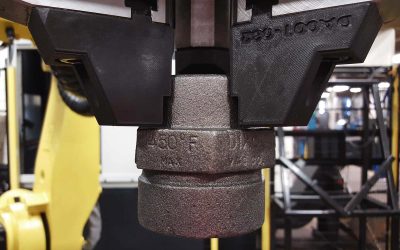
A fixture does not guide the cutting tool. Instead, it holds, supports, and locates the workpiece firmly against the machine's table or spindle. In modern CNC machining, fixtures serve as the primary workholding solution because the machine’s internal coordinate system already ‘knows’ the tool's exact position.
Common examples include a standard machine vise, a three-jaw lathe chuck, or a custom-milled aluminum fixture block designed for a specific part geometry. Unlike jigs, operators almost always bolt or clamp fixtures directly to the machine to withstand the heavy cutting forces generated during milling or turning.
Key differences: Jigs vs. fixtures
The technical distinctions between these two manufacturing aids are summarized in the table below:
| Feature | Jig | Fixture |
|---|---|---|
| Primary Function | Guides the tool and holds the part. | Secures and locates the part. |
| Tool Guiding | Uses bushings to direct the tool. | Does not guide the tool. |
| Machine Attachment | Often hand-held or unattached. | Fixed to the machine table or spindle. |
| Complexity | Generally lighter and more portable. | Often heavier and more robust. |
| Common Use Case | Manual drilling and tapping. | CNC milling, turning, and assembly. |
Why use jigs and fixtures in production?
Implementing these tools in a production line directly impacts the bottom line by transforming manual variables into mechanical constants. They enhance consistency and accuracy by replacing human judgment with repeatable reference points. This ensures the first part is identical to part 1000, which is a necessity for assemblies with tight tolerances.
Custom workholding also slashes ‘non-cutting’ time, significantly boosting overall productivity. Instead of an operator manually aligning a part with a dial indicator, they simply drop the workpiece into a fixture and begin machining immediately. Beyond efficiency, properly designed aids also safeguard the shop floor. They keep an operator's hands clear of the cutting zone and prevent part kickback or shifting that could lead to catastrophic tool failure.

Designing custom manufacturing aids: 3 considerations
When designing a custom jig or fixture, successful designs rely on ‘poka-yoke’ (fool-proofing) via locating pins and blocks. These features force a single, correct loading orientation, which prevents the costly scrap events that occur when parts are accidentally loaded upside down or backward.
Engineers must also balance clamping force with the overall rigidity. Over-clamping frequently warps thin-walled parts, while under-clamping allows for vibration and chatter that ruins the surface finish. Moreover, the design must account for chip clearance.
Without dedicated pockets or relief zones, metal waste builds up under the workpiece. This buildup forces the part to sit unevenly, ultimately compromising the dimensional accuracy of the entire operation.
3D printing vs. CNC machining for jigs and fixtures
The choice of manufacturing process depends entirely on the mechanical stress the tool will endure. 3D printing, specifically FDM or SLS, serves as the optimal choice for lightweight, ergonomic hand-held jigs or non-marring fixtures. Plastics such as Nylon or TPU protect finished surfaces and allow for complex, organic shapes that conform perfectly to a part's geometry.
For high-force applications like heavy milling or high-speed drilling, CNC machining remains essential for metal-on-metal durability. Steel or aluminum fixtures provide the rigidity and wear resistance required to withstand thousands of cycles. Unlike printed polymers, machined metal aids maintain their structural integrity even under the intense clamping pressures and heat generated by industrial cutting processes.
Understanding the specific differences between jigs and fixtures allows you to select the most cost-effective manufacturing aid for your application. Whether you require a simple 3D-printed drill guide or a complex CNC-machined milling fixture, prioritizing rigidity and location accuracy remains the key to successful production.
Not sure which workholding solution is right for your application? Our engineering team is ready to assist you in selecting the right material and manufacturing process for your custom jigs and fixtures. Contact our experts to discuss your project requirements.
Frequently asked questions
What are jigs and fixtures?
Jigs and fixtures are specialized production tools, often referred to as manufacturing aids, designed to facilitate the accurate production of components. Although engineers often group them together, they serve different purposes.
A jig acts as a guide for a cutting tool, such as a drill or reamer, to ensure that it enters the workpiece at a precise location. A fixture, on the other hand, is a workholding device that firmly secures and locates the part in a fixed position, allowing the machine itself to perform operations without the need for an external tool guide.
What are jigs and fixtures used for?
Manufacturers use these aids to bridge the gap between a design and a finished part with maximum efficiency. Jigs are primarily used in manual operations to eliminate the need for time-consuming marking or ‘laying out’ of holes.
Fixtures are used across almost every machining process, from CNC milling to assembly and welding to ensure that every part is held in the exact same orientation. By using these tools, a shop can produce thousands of identical parts while maintaining tight tolerances and reducing the likelihood of human error.
What are jigs and fixtures in manufacturing?
In a modern manufacturing environment, jigs and fixtures are the key to scalability and cost-reduction. They transform a complex, manual setup into a repeatable mechanical process. In high-volume production, these tools allow less-skilled operators to perform high-precision tasks safely and quickly. By minimizing ‘non-cutting’ time and ensuring that parts are correctly oriented through ‘poka-yoke’ (fool-proofing) features, jigs and fixtures ensure that the manufacturing process remains predictable, profitable, and safe.