
SLA 3D printing service
Source high-performing parts for rapid prototyping and production with Protolabs Network's SLA 3D printing service. We offer tons of prototyping and industrial resin materials and can print parts in as little as 1 day.
What is SLA 3D printing?
Stereolithography (SLA), also known as resin 3D printing, is a 3D printing technology that produces parts with high resolution and accuracy, fine details and smooth surface finishes. Part of the vat photopolymerization printing family, SLA technology uses photosensitive thermoset polymers to produce custom parts. We use Formlabs materials for rapid prototyping and 3D Systems Accura materials for large-scale production.
Learn more about SLA 3D printing
SLA 3D printing capabilities
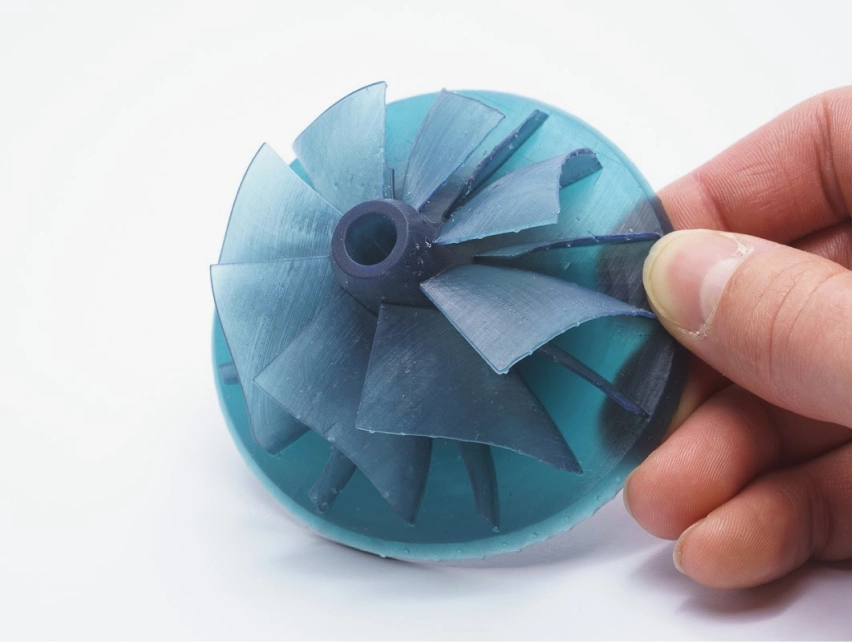
SLA 3D printing has two distinct classes: prototyping (desktop) SLA and industrial SLA. These are the key capabilities of each technology.
| Maximum build size | Standard lead time | Dimensional accuracy | Layer height | Minimum feature size | |
|---|---|---|---|---|---|
| Prototyping (desktop) SLA | 145 × 145 × 175 mm (5.7 in x 5.7 in x 6.8 in) | From 3 business days | ± 0.3% with a lower limit of ± 0.3 mm (± 0.012") | 50-100 μm | 0.2 mm |
| Industrial SLA | 500 x 500 x 500 mm (19.68 in x 19.68 in x 19.68 in) | From 3 business days | ± 0.2% with a lower limit of ± 0.13 mm (± 0.005") | 50-100 μm | 0.2 mm |
SLA 3D printing materials
Leading companies and engineers that need to iterate quickly or get strong industrial plastic parts faster use Protolabs Network for our range of prototyping and production materials.
Prototyping (desktop) SLA materials
Ideal for accurate visual prototypes with smooth surface finishes.
Formlabs Standard Resin
Formlabs Grey
Pro Resin
Formlabs Clear Resin
Formlabs Durable Resin
Formlabs High Temp Resin
Formlabs Flexible Resin 80A (US only)
Formlabs Tough Resin 2000
Formlabs Rigid Resin 4000
Industrial SLA materials
Ideal for durable functional prototypes and high precision parts with smooth surface finishes.
Accura ClearVue
Accura Xtreme White 200
Accura 25
Want to know more about SLA materials?
Read our SLA materials compared article
Formlabs Cure settings
| Resin | Post-cure time | Post-cure temperature |
|---|---|---|
| Standard clear | 15 min | 60 °C |
| Standard black | 30 min | 60 °C |
| Standard white | 30 min | 60 °C |
| Standard gray | 30 min | 60 °C |
| Tough 2000 | 60 min | 70 °C |
| Durable | 1 hour | 60 °C |
| Grey pro | 15 min | 80 °C |
| High temp | 2 hours | 80 °C |
| Flexible | 15 min | 60 °C |
| Rigid | 15 min | 80 °C |
How SLA stacks up: SLA vs SLS, FDM and MJF
| Materials | Price | Dimensional accuracy | Strengths | Build volume | Layer thickness | Min. feature size | |
|---|---|---|---|---|---|---|---|
| FDM | 5 | $ | ± 0.5% with a lower limit on ± 0.5 mm | Low cost, wide range of materials | 500 x 500 x 500 mm (19.68" x 19.68" x 19.68") | 100-300μm | 2.0 mm (0.0787’') |
| Industrial FDM | 6 | $$$$ | ± 0.3% with a lower limit of ± 0.3 mm (± 0.012") | High level of repeatability, engineering grade materials | 406 x 355 x 406 mm (15.98” x 13.97” x 15.98") | 100-330μm | 2.0 mm (0.0787’') |
| Prototyping SLA | 8 | $$ | ± 0.3% with a lower limit of ± 0.3 mm (± 0.012") | Smooth surface finish, fine feature details | 145 × 145 × 175 mm (5.7" x 5.7" x 6.8") | 50-100μm | 0.2 mm (0.00787’') |
| Industrial SLA | 3 | $$$ | ± 0.2% with a lower limit of ± 0.13 mm (± 0.005") | Smooth surface finish, fine feature details, big print area | 500 x 500 x 500 mm (19.68" x 19.68" x 19.68") | 50-100μm | 0.2 mm (0.00787’') |
| SLS | 2 | $$ | ± 0.3% with a lower limit of ± 0.3 mm (± 0.012”) | Design flexibility, supports not required | 395 x 500 x 395 mm (15.53" x 19.68" x 15.53") | 100μm | 0.5 mm (0.0196”) |
| MJF | 2 | $$ | ± 0.3% with a lower limit on ± 0.3 mm (0.012’') | Design flexibility, supports not required | 380 x 285 x 380 mm (14.9’’ x 11.2’’ x 14.9’') | 80μm | 0.5 mm (0.0196”) |
What does an SLA 3D printing service cost?
The cost of an SLA 3D printing service depends on your part geometry, resin material, quantity, layer height, and finishing requirements. Because SLA produces highly accurate parts with smooth surface finishes and fine feature resolution, pricing can vary depending on the material and application.
Upload your CAD file to receive an instant quote and compare pricing across SLA materials, lead times, and finishing options.

Post-processing for SLA 3D prints
Standard (no additional post-processing)
-
All support material is removed and support nibs are sanded smooth.
-
For clear resins, a polishing oil is applied.
-
Formlabs materials are cured in a Form Cure using the following settings which follow the official Formlabs “Recommended Cure” settings.
Design guidelines for SLA
3D printing
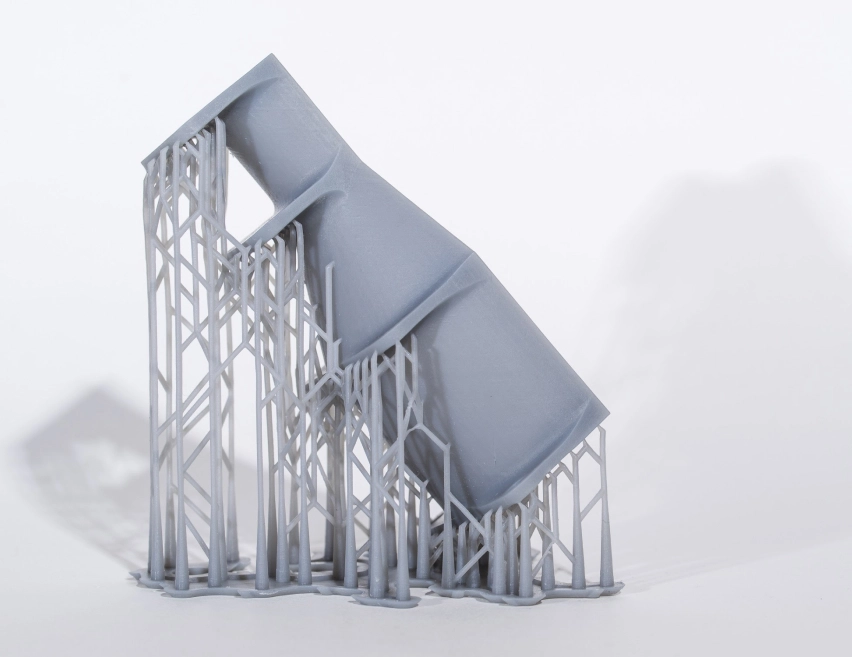
This table summarizes the recommended and technically feasible values for the most common features of SLA 3D printed parts.
Read more about how to design for 3D printing
| Feature | Recommended size |
|---|---|
| Unsupported walls | 1.0 mm (0.0393 in) |
| Supported walls | 0.5 mm (0.0197 in) |
| Minimum feature size | 0.2 mm (0.00787 in) |
| Minimum hole diameter | 0.5 mm (0.0197 in) |
| Minimum escape hole diameter | 4.0 mm (0.157 in) |
Advantages and limitations of SLA 3D printing

Advantages
-
SLA can produce parts with very high dimensional accuracy and intricate details.
-
SLA parts have a very smooth surface finish, making them ideal for visual prototypes.
-
Speciality SLA materials are available, such as clear, flexible and castable resins.

Limitations
• SLA parts are generally brittle and not suitable for functional prototypes, though industrial SLA can produce more functional components for this stage.
• The mechanical properties and visual appearance of SLA parts will degrade over time when the parts are exposed to sunlight.
• Support structures are always required and post-processing is necessary to remove the visual marks left on the SLA part.
We have high standards for SLA 3D printing
We manufacture your custom parts according to strict manufacturing standards and ensure all parts and processes adhere to The Protolabs Network Standard. A thorough verification of these requirements is included in our inspection report that we ship with every order.
-
Parts are fully cured to material manufacturer specifications before shipping.
-
Hollow sections are drained of excess resin.
-
All support material is removed and support nibs must be sanded smooth.

FAQ's about SLA 3D printing service
What materials are available for SLA 3D printing?
SLA 3D printing uses photopolymer resins to produce parts with high accuracy and smooth surface finishes. Prototyping SLA materials include Formlabs Standard, Clear, Durable, Tough, High Temp, Flexible, and Rigid resins, while industrial SLA materials include production-grade options such as Accura ClearVue, Accura Xtreme White 200, and Accura 25. Material selection depends on the required mechanical properties, appearance, and end-use application.
What is the lead time for SLA 3D printing?
Standard lead times for both desktop and industrial SLA start from 3 business days. Production time may vary depending on part size, quantity, material choice, and post-processing requirements.
What is the maximum build size for SLA?
Maximum build size depends on the type of SLA technology used. Desktop SLA supports parts up to 145 × 145 × 175 mm, while industrial SLA can produce parts up to 500 × 500 × 500 mm, making it suitable for larger prototypes and production parts.
How accurate is SLA 3D printing?
SLA is one of the most accurate additive manufacturing technologies available. Desktop SLA parts can achieve dimensional accuracy of ±0.3% with a lower limit of ±0.3 mm, while industrial SLA can achieve ±0.2% with a lower limit of ±0.13 mm. The technology is particularly well suited to parts that require fine details and smooth surface finishes.
Can SLA parts be used for functional prototypes?
Yes. Industrial SLA materials are commonly used for durable functional prototypes and high-precision parts. While some standard SLA resins are best suited for visual models and concept validation, engineering-grade resins can provide improved toughness, heat resistance, and durability for functional testing applications.
What are the advantages of SLA 3D printing?
SLA is known for its excellent dimensional accuracy, smooth surface finish, and ability to produce intricate details. The technology also offers access to specialty materials such as clear, flexible, and high-temperature resins.
What are the limitations of SLA 3D printing?
SLA parts generally require support structures and post-processing after printing. Standard SLA materials can also be more brittle than nylon-based technologies such as SLS or MJF, and prolonged exposure to sunlight may affect material properties over time.
What is the difference between desktop and industrial SLA?
Desktop SLA is typically used for rapid prototyping and smaller parts, while industrial SLA offers larger build volumes, higher dimensional accuracy, and materials designed for more demanding functional applications.
What surface finish can SLA achieve?
SLA produces some of the smoothest surface finishes available in additive manufacturing, making it a popular choice for visual prototypes, presentation models, and parts with fine cosmetic details.
When should I choose SLA instead of MJF or SLS?
SLA is often the preferred choice when surface quality, fine details, and dimensional accuracy are the primary requirements. MJF and SLS are generally better suited for durable nylon parts and applications that require greater mechanical performance.
More resources for SLA
3D printing
Learn more about how SLA 3D printing works and how to design parts for this adaptive additive manufacturing technology.
| Introductory guides |
|---|
Our other 3D printing processes
FDM

FDM
Fast & affordable prototyping
-
Dimensional accuracy of ± 0.5% with a lower limit: ± 0.5 mm
-
Lead times from 1 business day
MJF
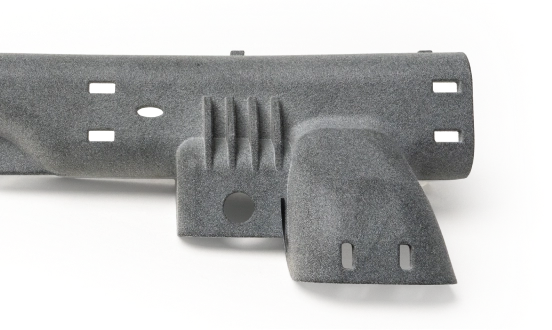
MJF
Functional prototyping & low-run production
Dimensional accuracy of ± 0.3% with a lower limit of ± 0.3 mm (± 0.012")
See our MJF services
SLS
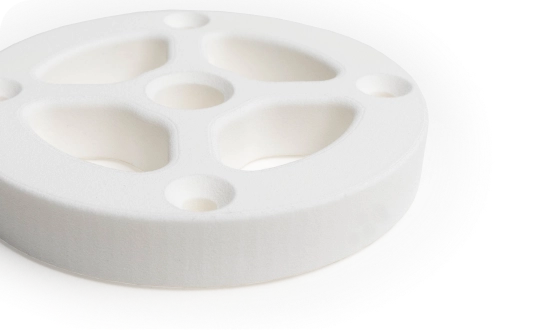
SLS
Functional prototyping & low-run production
Dimensional accuracy of ± 0.3% with a lower limit of ± 0.3 mm (± 0.012")
See our SLS services